
Square feet of DFW industrial net absorption in the first half of 2026.
Rounded from 13.63M; all tracked industrial categories. Cushman & Wakefield, Q2 2026 ↗Pre-engineered metal buildings · Texas
Room to work.
Room to grow.
Manufacturing. Flex space. Storage. Explore why a coordinated steel building system belongs in the conversation about Texas’s next generation of commercial space.
Explore the building typesSource-linked information. Texas perspective. Brought to you by TriTex.
People in the Dallas–Fort Worth metro area in 2025.
Approximately; metro population, not city population. U.S. Census, May 2026 ↗Square feet of annual Texas manufacturing-space demand forecast for 2025–26.
Statewide forecast—not completed construction. Texas A&M, Spring 2025 ↗The building follows the business
One construction approach.
Many ways to put it to work.
Manufacturing & workshops
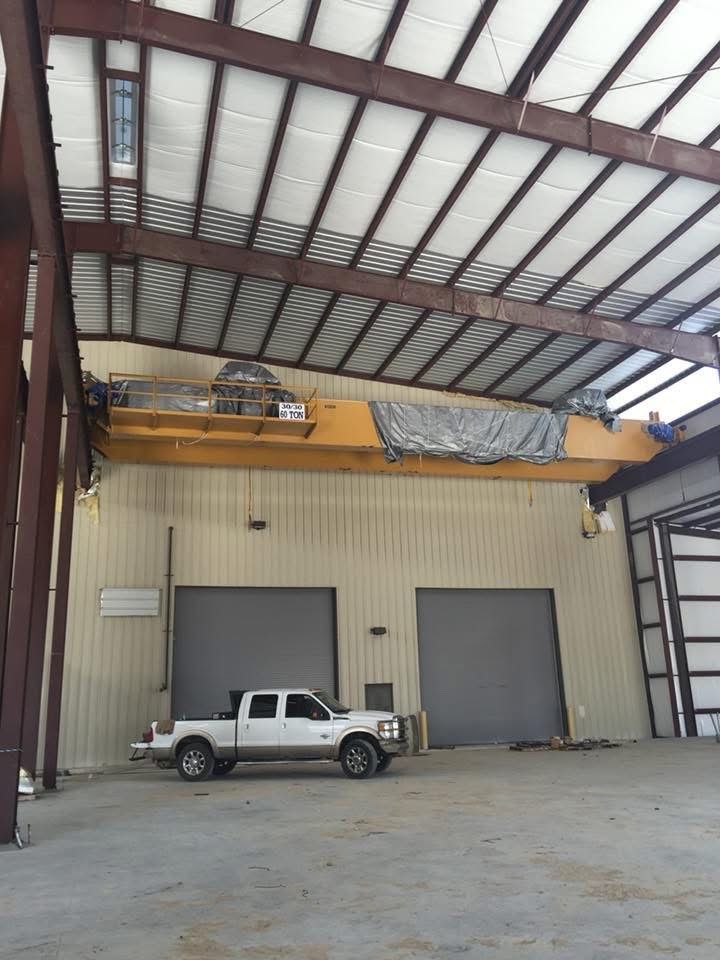
Start with the process: equipment, clear height, service access, power and any crane requirements. The structure can then be designed around how the business actually operates.
Flex space
Bring offices, work areas and storage together in a commercial shell. Coordinate tenant bays, overhead doors, utilities and future changes before the frame is ordered.
Climate-controlled storage
A comfortable, dry interior takes more than a metal shell. Plan insulation, air sealing, vapor control and HVAC as a coordinated system, with a unit mix suited to the local market.
The PEMB advantage
Design, fabrication and fit—
working together.
A pre-engineered metal building is a coordinated structural steel system, not a lesser alternative to “structural steel.” Factory-fabricated framing and compatible roof and wall systems create a practical starting point for many low-rise commercial projects.
Read the Metal Building Manufacturers Association overview ↗
Flex space is more than office + warehouse
Different businesses.
Different kinds of demand.
The opportunity is useful space at a scale the business can occupy. These eight common use families explain why owners ask for flexibility—and why one generic bay cannot serve every tenant.
80%+
Of shallow-bay inventory in CBRE’s major-market analysis was built before 2000; only 5% was built since 2010.
March 2026 research; buildings under 50,000 sq ft. An aging-inventory signal, not a count of unmet local demand. Read the analysis ↗
Contractor & service bays
HVAC, electrical, plumbing, installation and repair businesses need a working base close to customers. A bay can bring tools, materials, dispatch and a small office together.
Shallow-bay research identifies local service businesses as an important demand source.
Building priorities
Plan for vehicle access, secure storage, practical doors and permitted outdoor use.
Office-warehouse & distribution
A business can manage orders at the front and receive, store and dispatch goods at the back. Local suppliers and smaller distributors need a different layout from a regional fulfillment center.
CBRE links smaller-format demand to last-mile distribution and local occupiers.
Building priorities
Coordinate office share, loading, delivery circulation, power and parking.
Light manufacturing & assembly
Fabrication, assembly and small-scale production need places where equipment, people and material flow work together. The right-sized bay can let a producer move beyond an undersized shop.
Texas A&M identifies flex buildings as a potential fit for smaller manufacturers in its statewide 2025–26 forecast.
Building priorities
Confirm power, ventilation, floor loads, equipment clearances and process approvals.
Showroom, sales & service
Some businesses need both a customer-facing space and a back-of-house operation: product display, inventory, customization, installation or repair. That combination is the business case for showroom/service flex.
This is an operational use case, not a separately measured local shortage.
Building priorities
Give customers a clear entrance; separate deliveries and work areas; confirm occupancy and parking.
Research, testing & specialty operations
Technical firms can combine offices with testing, prototyping or other specialized work. CBRE reported Terracon’s 31,814-square-foot Florida industrial-flex lease in February 2026—one example, not a Texas demand estimate.
Specialty demand is highly user-specific. CBRE reported 23.8% national lab/R&D vacancy in Q2 2026, so labs are not a blanket shortage story.
Building priorities
Start with the user’s utilities, ventilation, cleanliness, vibration and safety requirements.
CBRE · Terracon lease example ↗ · National lab-market context ↗
Climate-controlled business storage
Inventory, samples, records and equipment may need indoor conditions that ordinary unconditioned space cannot provide. Pairing suitable storage with workspace can support day-to-day business operations.
Demand depends on the goods, the operator and the trade area; it is not interchangeable with household self-storage.
Building priorities
Specify temperature and humidity targets, access patterns and operating costs. Climate control is not automatically refrigeration.
Food production & refrigerated flex
Small food producers and distributors may need production, packing, refrigerated storage and dispatch in one location. This is a specialized business requirement, not an ordinary storage-bay fit-out.
Potential demand should be established with actual operators and local feasibility work.
Building priorities
Evaluate refrigeration, sanitation, drainage, utilities and food-safety approvals before choosing the shell.
Training, recreation & creative space
Fitness, indoor training, maker studios and other customer-serving uses can benefit from adaptable open interiors. Their space needs follow memberships, bookings or customer activity—not warehouse leasing statistics.
These are potential commercial applications; they may not be classified as industrial flex.
Building priorities
Check zoning, occupancy, accessibility, egress, restrooms, acoustics and parking for the actual use.
Read “flex” in context.
Shallow-bay industrial, office-heavy flex, flexible offices/coworking and specialty laboratories are not one market. CBRE’s national small-bay findings and DFW’s negative first-half office-service/flex absorption can both be true: definitions, places and reporting periods differ.
Use these demand drivers to shape a tenant brief, then validate local rents, competing supply and the intended use. The building priorities above are editorial planning guidance—not separate forecasts or code specifications.
An economy connected by more than roads
The Texas Triangle
needs places to work.
Rice University’s Kinder Institute describes Dallas–Fort Worth, Houston, Austin and San Antonio as an increasingly connected megaregion. For building owners, that is a useful way to think about customers, suppliers and workforce—not just the boundary of one city.
Rice Kinder Institute · J.H. Cullum Clark · May 14, 2021 ↗
Explore the Texas Triangle guide →Small businesses belong in the story.
Texas A&M’s Spring 2025 manufacturing forecast includes 2.7 million square feet of annual demand from firms with fewer than 20 employees, plus 2.3 million from firms with 20–99 employees. Its analysis identifies flex buildings and smaller industrial spaces as possible fits for small producers.
Our planning takeaway: do not design only for the giant warehouse. A well-planned shop, small manufacturing building or flexible business bay can serve a different customer.
Texas A&M Texas Real Estate Research Center · Made in Texas ↗
This is an interpretation of a statewide forecast, not a prediction for a specific property.
Where activity is documented
DFW is a big market.
Location still matters.
Cushman & Wakefield’s first-half 2026 figures show Alliance leading these DFW submarkets. South Fort Worth also recorded substantial net absorption. That is encouraging regional context, but it does not make every southwest-corridor parcel a proven winner.
Net absorption is the change in occupied space—not gross leasing, construction starts or a count of missing buildings. Warehouse/distribution drove the report’s overall growth; manufacturing and office-service/flex recorded negative first-half absorption.
Selected leading submarkets; one provider and one reporting period. South Fort Worth is not identical to the US 377 southwest corridor.
Climate-controlled storage
Build the right units.
Protect the right conditions.
Metal building systems can pair a practical structural grid with insulated walls and roofs. MBCI’s storage guidance explains how metal panels serve both interior storage layouts and weather-resistant exteriors. Insulated metal panels are one option for bringing insulation and enclosure functions together.
MBCI · A Storehouse of Storage Solutions · October 2016 ↗
Climate-controlled self-storage serves household and business belongings. Refrigerated industrial cold storage serves a different operation, with different temperatures, equipment and economics. They should not be treated as the same market.
Where is storage needed most?
At a location where a trade-area study demonstrates an actual gap. Population growth alone does not prove one; Yardi’s September 2026 national report shows a competitive pricing environment.
- Nearby occupancy, effective rents and concessions
- Existing competitors and permitted new supply
- Unit sizes, access, visibility and customer travel time
- HVAC, moisture control and long-term operating costs
Southwest Fort Worth & the surrounding communities
Explore the places.
Then plan the building.
The area offers several distinct business settings. Cresson’s completed US 377 relief route adds transportation context; Burleson’s Highpoint Business Park is an established manufacturing and distribution location along I-35W.
TxDOT: Cresson relief route ↗ · Burleson EDC: Highpoint Business Park ↗
Access is only the first question. Confirm zoning, water and fire flow, power, drainage, workforce and the intended user before committing to a site.
Local building information
Cresson Crossroads: history, roads & local context →
The community guide and local building pages are TriTex-sponsored resources. They are not independent market feasibility studies.
Go straight to the evidence
Sources & further reading
- DFW industrial market report ↗
Cushman & Wakefield · Q2 2026 · Observed market activity. - Made in Texas ↗
Texas A&M Texas Real Estate Research Center · Spring 2025 · Statewide manufacturing forecast. - Major-city outer-edge growth ↗
U.S. Census Bureau · May 14, 2026 · 2025 population estimates. - The Texas Triangle: A rising megaregion unlike all others ↗
Rice University Kinder Institute · May 14, 2021 · Regional context. - Self-storage national report ↗
Yardi Matrix · September 18, 2026 · August market data. - A Storehouse of Storage Solutions ↗
MBCI · October 7, 2016 · Product/application guidance; its old market-size statistics are not used here.
From information to a real project
Put the right building
around your business.
TriTex Building Systems, LLC brings commercial construction, pre-engineered metal buildings, flex space, manufacturing and climate-controlled storage together with engineering and architectural services.